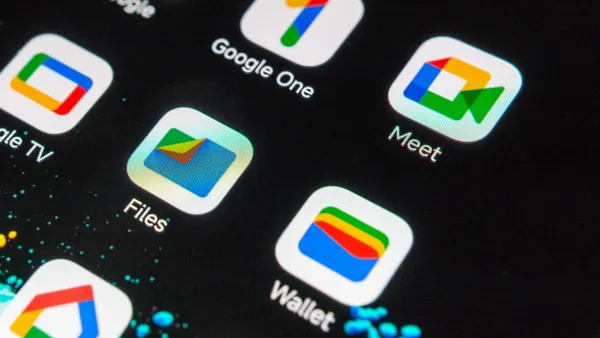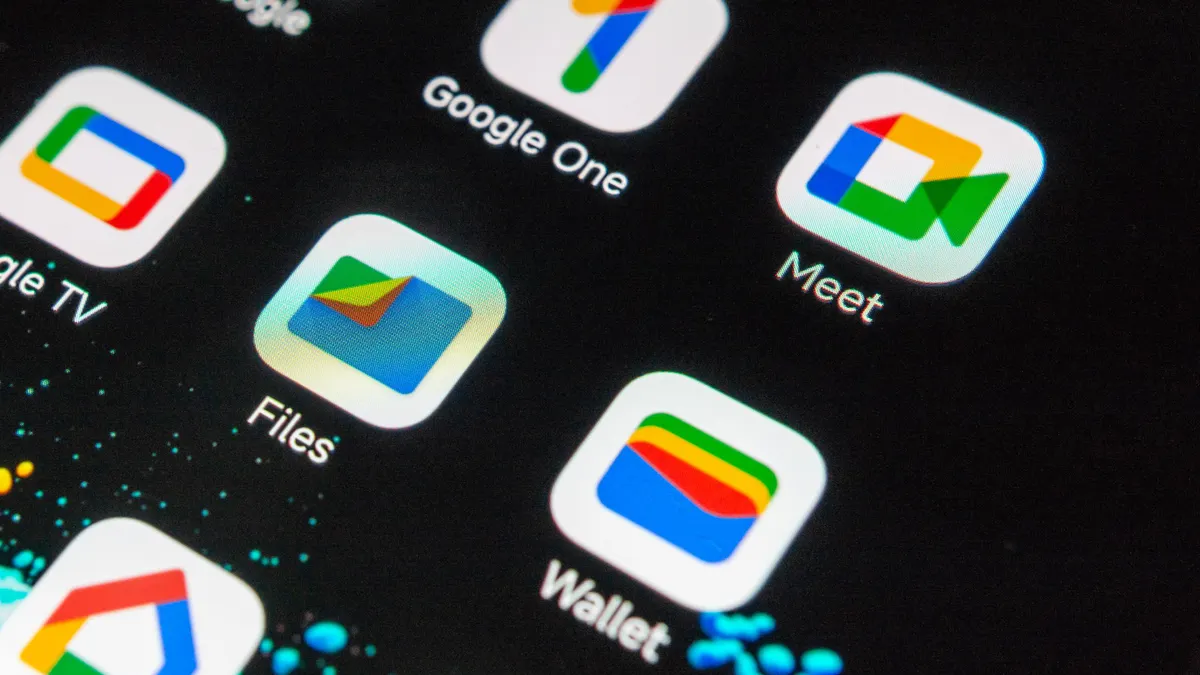
For many consumers, the digital wallet is their home for payment cards, and maybe an ID.
Google has a far grander vision of what its wallet should be and do, including a repository for receipts, tracking online orders, arranging refunds and transmitting merchant discounts and other marketing promotions, the technology company’s head of payments said last week in an interview.
Adding new capabilities to Google’s wallet will boost adoption and offer consumers a more “seamless” retail experience, said Stavan Parikh, vice president and general manager of payments at the company.
A more robust digital wallet will mean “that you can truly start leaving your home without your physical wallet,” he said Oct. 26. “So far, most of us can’t do it because there's always one thing that we need to carry.”
That reliance on the physical wallet will begin to change as people find they can use their digital wallet for more than a payment or to store their loyalty cards, he said.
The wallet push gives Google “an opportunity to make commerce journeys more seamless, both across online and offline, because the vast majority of commerce today still happens offline, and the offline journey hasn’t yet been enhanced with digital wallets or technology in some of these ways,” Parikh said.
Over the past few months, Google has redesigned multiple aspects of its Android-based wallet. Among some of the more prominent changes are an expanded form autofill capacity for the Chrome browser with a closer integration to the wallet, announced in June. Google is also tweaking the wallet to allow for larger images and more space for brands.
Shopping bargains delivered via the wallet will be a crucial path to further digitize the retail world and drive further wallet use, Parikh said, as people seek to save money and simplify their transactions.
“Saving money is a higher-order” priority for consumers, he said. “A lot of commerce transactions are tied to that, and we are partnering with merchants. We are partnering with the (Google) shopping team and others to kind of say, ‘How do we connect the dots so that the right offer shows up to the user at the right time?’”
The tech world is also leading the push into agentic commerce, with companies from OpenAI to Google, as well as card networks Mastercard and Visa and digital payments company Stripe, all advancing technical protocols and other efforts to bring shopping to artificial intelligence agents.
Digital wallets are likely to assume more importance in the arena of agentic commerce as the means for digital agents to pay for goods and services on behalf of humans, Lisa Yokoyama, a director of product management for Google Pay, said during an Oct. 20 panel discussion of agentic commerce at the Money20/20 financial technology conference in Las Vegas.
Stripe, for example, is promoting its Link wallet as an agentic payment tool, working with Meta Platforms and other agent purveyors.
A digital wallet offers merchants and consumers a “more immersive, more interactive surface where card art can be vibrant and visual,” Yokoyama said during the agentic commerce discussion.
“Transactions can be done in real-time on a surface that's in context of the exact transaction or the online checkout flow,” she said. “That created a dialog in a way that you can’t with an analog piece of plastic or metal.”
Google also wants to leverage agentic commerce with infrastructure that would allow people to give a third-party agent “a credential that is constrained in some way and doesn’t leak your private information that you may not want to leak,” he said.
“That's what we have done with Gemini and (Google) Pay … to give these agents credentials that are constrained and ensure that users can continue trusting it,” Parikh said. “The opportunity is definitely there, and I think the infrastructure is there. Now, can we get the right product experience out? (That) is the piece that we are focused on.”
Over time, Parikh sees the wallet becoming a more helpful consumer tool tied closer to the entire shopping experience than how most people use them today.
Beyond a payment, wallets should also allow users to see the status of the transaction, react to a transaction and handle refunds, with “all of those things in your digital wallet,” he said. “We're really just kind of scaling the wallet for end-to-end commercial journeys.”