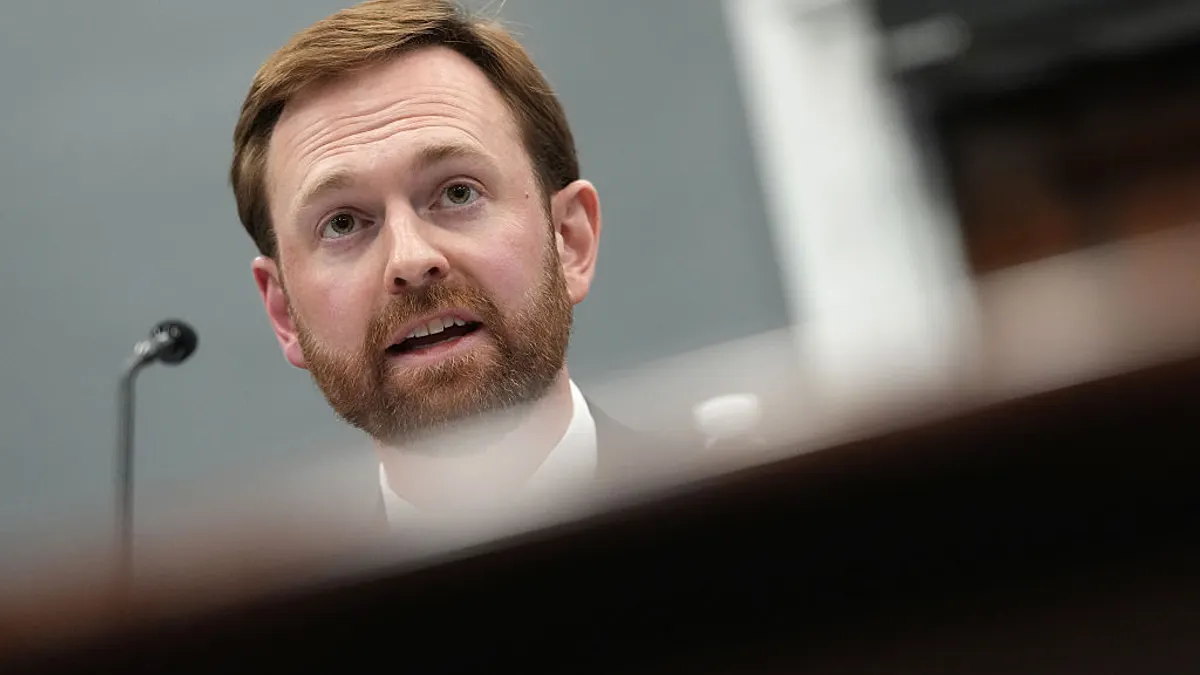
Top payments companies received letters Thursday from Federal Trade Commission Chairman Andrew Ferguson demanding they not discriminate against customers based on political or religious grounds.
The CEOs of Visa, Mastercard, PayPal Holdings and Stripe received the FTC missives from the federal agency, which threatened enforcement action if customers are denied services for those illegal reasons.
The letters warned the companies that any act to “deplatform customers or deny them access to financial products or services” may violate the Federal Trade Commission Act and “could lead to an FTC investigation and potential enforcement action,” a Thursday press release from the agency said. The agency didn’t cite any specific infractions by the companies.
The commission is typically made up of five members, but it currently has only two. Last year, President Trump fired two of the Democrats who previously sat on the commission.
The letters echoed allegations made by Trump’s administration against major U.S. banks last year over “debanking” practices, by which the administration has contended banks illegally discriminated against some people or companies.
“As an American citizen, I abhor and condemn any efforts to debank or otherwise deny law-abiding consumers access,” Ferguson said in the letters, citing a Trump executive order last year aiming to preclude financial institutions from attempts to illegally block access to financial services.
That order said federal banking regulators should identify consumers to whom financial institutions may have denied payment processing services by way of a “politicized or unlawful debanking action.” The order also required that alleged victims of discrimination be notified and given the opportunity to receive the services they were denied.
In January, Trump sued JPMorgan Chase and its CEO Jamie Dimon for $5 billion over what he alleged was the bank’s improper closure of his accounts in 2021 for political reasons. The bank, which is the largest in the U.S., is fighting the claims. The Trump Organization, led by the president’s sons, also sued Capital One Financial last year over similar debanking allegations, and a federal judge last week dismissed that lawsuit, but gave the plaintiffs time to refile.
FTC targets card networks
Now, similar barbs are being directed at major payments players, by way of the FTC letters.
“Equally concerning is the conduct of payments providers and payment networks that turn a blind eye when their financial institution members debank consumers for these reasons,” Ferguson said in the letters to Visa and Mastercard.
The four letters were similar, resting on Section 5 of the Federal Trade Commission Act that prohibits “unfair or deceptive acts or practices.”
The letter to San Francisco-based Visa, the largest U.S. card network and a major global service provider, noted its terms and policies cover a wide range of service aspects, including merchant eligibility, use of its card network, information requirements, data security, account termination and dispute resolution.
“It is thus critical that Visa neither deny its customers access to services due to their political or religious views, nor countenance unlawful debanking by members that process transactions on its network,” the letter to Visa CEO Ryan McInerney said.
Spokespeople for Visa and Purchase, New York-based Mastercard didn’t respond to requests for comment.
Visa is already in the administration’s sights in that the Justice Department is pursuing a case against the card network with respect to its debit card practices. That antitrust lawsuit was filed by the Biden administration in September 2024.
FTC swings at PayPal and Stripe too
The FTC letter to PayPal CEO Enrique Lores, who took the digital payment pioneer’s top post this month, pointed to the company’s “potential treatment of customers,” based on news stories from conservative publications The Free Press and the Telegraph.
“In recent years, concerns have been raised about PayPal’s potential treatment of its customers, in particular its efforts to deny them access to services due to their political or religious views, that raise serious questions about whether PayPal is acting in accordance with its terms of service,” the letter to Lores said.
A spokesperson for San Jose, California-based PayPal declined to comment.
In the letter to Stripe, the administration noted the company offers payments processing of credit and debit card payments as well as digital wallets and Automated Clearing House transfers, providing services that are “essential for Americans’ participation in everyday commerce, and — directly or indirectly — for the exercise of core rights and freedoms.”
“Despite its terms of service, and representations to customers that it ‘does not discriminate based on political affiliation or viewpoints,’ in recent years, concerns have been raised about Stripe’s potential treatment of its customers, in particular its efforts to deny them access to services due to their political or religious views, that raise serious questions about whether Stripe is acting in accordance with its terms of service,” the letter to CEO Patrick Collison said.
Stripe is younger than the other payments companies, founded by Collison and his brother John Collison in 2010. It has dual headquarters in South San Francisco and Dublin.
A spokesperson for Stripe denied the suggestion that the company discriminates. "At Stripe, we do not restrict access to our services based on political viewpoints or affiliation,” the spokesperson said by email.