The Federal Trade Commission and eight states sued Toast on Thursday, alleging that the point-of-sale company misled restaurant clients and their customers with hidden fees and subscription plans that were difficult to cancel.
The lawsuit also said that Toast failed to deliver the customer support help that it had pledged, and obscured a 99-cent fee Toast collected from consumers who placed online orders.
“Toast failed to honor a number of its promises and instead imposed hidden fees, unauthorized charges and subscription traps that drained the hard‑earned profits of businesses just trying to serve their customers,” the FTC’s Bureau of Consumer Protection director, Christopher Mufarrige, said Thursday in a press release.
The FTC was joined in the lawsuit by California and attorneys general in seven states: Colorado, Florida, Illinois, Iowa, Nebraska, Oklahoma and Utah.
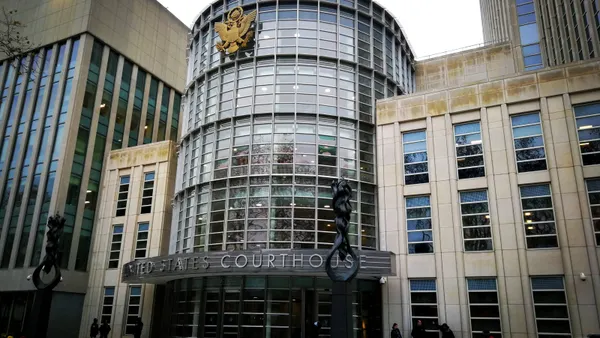
The lawsuit, filed in U.S. District Court for Northern California, says that “at least tens of thousands of consumers have complained about these issues to the FTC, online, and directly to Toast.”
Toast said in a press release that it disagreed with the allegations “and will vigorously defend” itself against the claims.
“Toast has been cooperating fully with the FTC's review of this matter since mid-2025 and has engaged in good faith throughout, including efforts to reach a resolution short of litigation,” the company said. “The FTC disregarded the information we provided showing the extent to which our restaurant customers negotiate their contracts. We are prepared to defend our business and fight this unprecedented action through litigation.”
Boston-based Toast sells hardware and software services, including payment processing, to help restaurants and other merchants handle their sales.
As part of their Toast agreements, restaurants must enroll in auto-renewing subscriptions, with an average cost of $900 monthly, according to the lawsuit. The monthly cost is determined by how many terminals and added services a business chooses to bundle into the subscription, the plaintiffs said.
“Toast customers frequently complain that they have been enrolled in and charged for Toast subscription add-ons without their consent,” the lawsuit says.
Toast has “used false claims” to entice customers to enroll in subscription services, including an offer of free Toast products under some pricing plans, along with “24/7/365” customer support, according to the lawsuit.
“In fact, none of Toast’s hardware is $0, and Toast customers frequently claim that they cannot get customer support at any hour of the day,” the lawsuit said.
The company has also made it difficult for customers to end their subscriptions, according to the lawsuit.
“The convoluted, multi-step cancellation process instituted by Toast, combined with Toast’s customer support failures, prevents or makes it hard for consumers to cancel their subscriptions, saddling consumers with additional months or even years of unwanted charges,” the government plaintiffs wrote.
The lawsuit said that Toast’s subscription cancellation process is “nonintuitive, time-consuming, far from simple, and requires the involvement and cooperation of multiple teams within Toast.”
For those who successfully ended their Toast accounts, “in many instances, Toast has hit them with unexpected high-dollar early termination fees or continued to charge them for subscription services without consent,” the lawsuit says.
The lawsuit also said that Toast is collecting obscured fees from restaurant patrons who order online.
Since June 2023, Toast has collected a 99-cent fee from diners using online digital sales channels for orders above $10, beyond other fees it charged restaurants, according to the lawsuit. The company began testing this fee in some locations in September 2021, according to the lawsuit.
“Nowhere did Toast state that it, not local restaurants, would keep the fee,” the plaintiffs said. “Instead, Toast used language obscuring that it was the primary or sole beneficiary of the fee.”
The lawsuit alleges that Toast violated the FTC Act and the 2010 Restore Online Shoppers’ Confidence Act, along with the states’ consumer protection and unfair and deceptive trade practices laws.
In its press release, Toast said that no court has found that the ROSCA law applies to “negotiated business-to-business agreements, and we don’t believe it applies here.”
Toast is scheduled to report its third-quarter financial results on Tuesday.