Financial technology firms, including Ramp and Stripe, are still pushing for access to Federal Reserve payment rails, aiming to see movement of a bill pending in Congress.
Executives from both companies spoke at a conference last month in favor of gaining access to Federal Reserve payment systems, which include Fedwire Funds Service, FedNow Service and FedACH Services.
Stripe has no access to a Federal Reserve master account, “even though we settle lots of payments every day, and it would be really efficient and really safe for our users to be able to do so,” Jonah Crane, head of global regulatory and policy at Stripe, said at a Sept. 25 panel discussion.
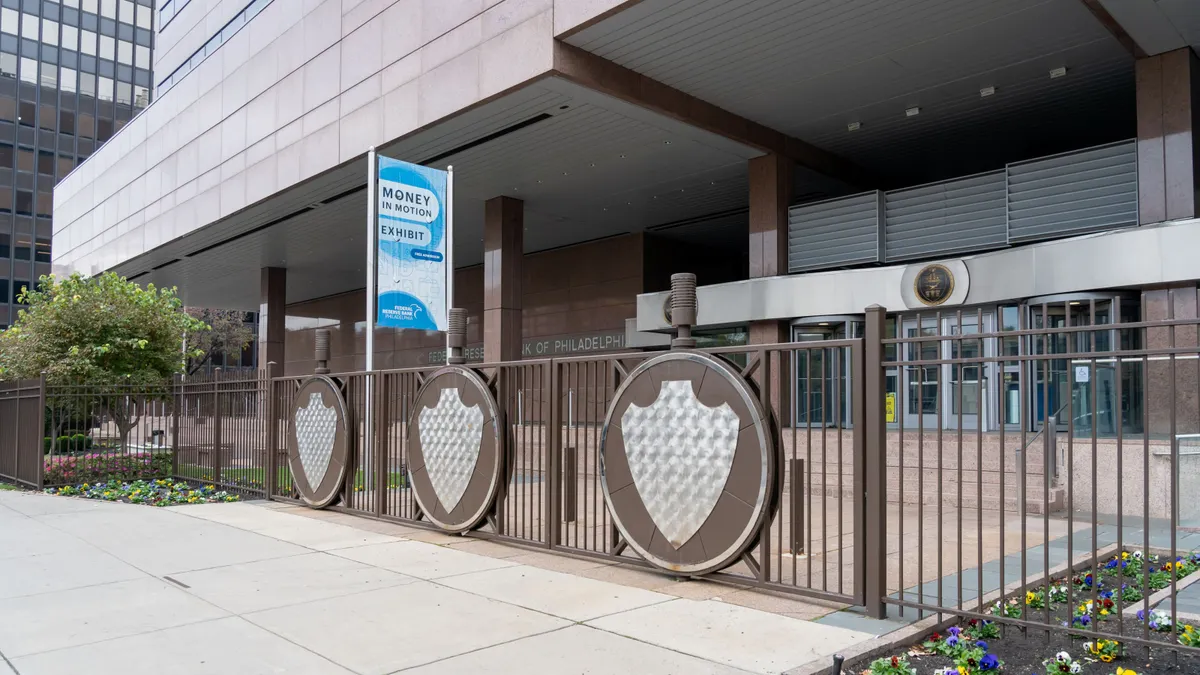
“The core challenge we see is just the mismatch between our business and the sort of legacy regulatory boxes, and we constantly have these square-peg, round-hole problems,” Crane added during the talk, which was held at the Philadelphia Federal Reserve Bank’s annual fintech conference.
In April, California Republican Rep. Young Kim introduced the Payments Access and Consumer Efficiency (PACE) bill to address fintechs’ desire for more Fed access. The measure is designed to let these companies use the U.S. electronic payments systems under new oversight from the Office of the Comptroller of the Currency.
The bipartisan bill was cosponsored by Rep. Sam Liccardo, a Democrat who represents a Silicon Valley district that includes part of San Jose, California, cosponsored Kim’s bill. In June, the legislation collected a second cosponsor when Rep. Pete Sessions, a Texas Republican, signed on.
“We think that (the bill) would enable faster, cheaper payments for consumers and for the businesses that we serve,” said Alissa Kratsios, Ramp’s head of global policy.
New York-based Ramp processes about $200 billion in corporate payments each year, or about 3% of all U.S. corporate card spending, she said.
Fed ACH access is “particularly important” to Ramp because about 90% of its payments use that rail, she said. Efforts to widen access to such rails is “certainly not sidestepping regulation,” Kratsios added.
The U.S. is the only G7 member nation that doesn’t allow direct payment access for non-bank firms, she said. “This is a great initiative that would allow well-regulated firms to apply for access to Fedwire, FedNow, and Fed ACH with oversight from the OCC,” Kratsios said.
There is no Senate companion legislation to the House bill, according to Congress’ website, and its prospects for passage this year appear limited given the November midterm election. A spokesperson for Kim did not respond to a request for comment on the bill’s progress.
The Financial Technology Association views Kim’s bill as “a priority to revisit in the new Congress, and we continue to see demand in the marketplace for faster, cheaper payments,” a spokesperson said Monday in an email. The FTA’s chief executive, Penny Lee, moderated the Fed panel discussion last month.
Beyond the House bill, the Fed is also laboring to accommodate an executive order President Donald Trump signed in May, directing the bank to review its practices with the aim of opening U.S. payment rails to more fintechs.
Under current rules, many fintechs that aren’t banks must acquire money transmitter licenses on a state-by-state basis to offer their services. The bill would create a new payments service provider registration process with the OCC that would be available to non-bank entities such as Chime, Ramp and Stripe.
Banking groups have criticized the idea, including at a June hearing on the legislation by the House Financial Services Committee. Banks noted the strict regulations required for oversight of their services. They also have raised concerns about risks to U.S. payments systems posed by less-regulated fintechs.